Pioneer: Go-To-Market Strategy
Pioneer: Go-To-Market Strategy
Overview / The Challenge
The cannabis B2B market was notoriously capital-constrained. Clients had tight budgets, and as a bootstrapped startup, so did we. The challenge was to engineer a GTM machine that bypassed expensive ad networks and sponsorships. In order to prove value before asking for the sale, we needed to turn our proprietary data from a static product into a dynamic growth engine.
Strategy / The Blueprint
I inverted the traditional sales funnel. Instead of marketing to the industry, I decided to give the industry the product for free— selectively.
Data as Content: We realized our rankings were more valuable than any ad we could buy. We packaged our top-level data into public "lists" to drive mass awareness and borrow authority from established publishers.
The "Free Sample" Pivot: We stopped trying to sell the idea of analytics and started giving away the proof. We used the Scorecards as targeted samples— giving prospects a free, private look at their own performance to prove utility before asking for a contract.
Execution / The Build
We built a zero-cost distribution flywheel anchored on partnerships and sampling:
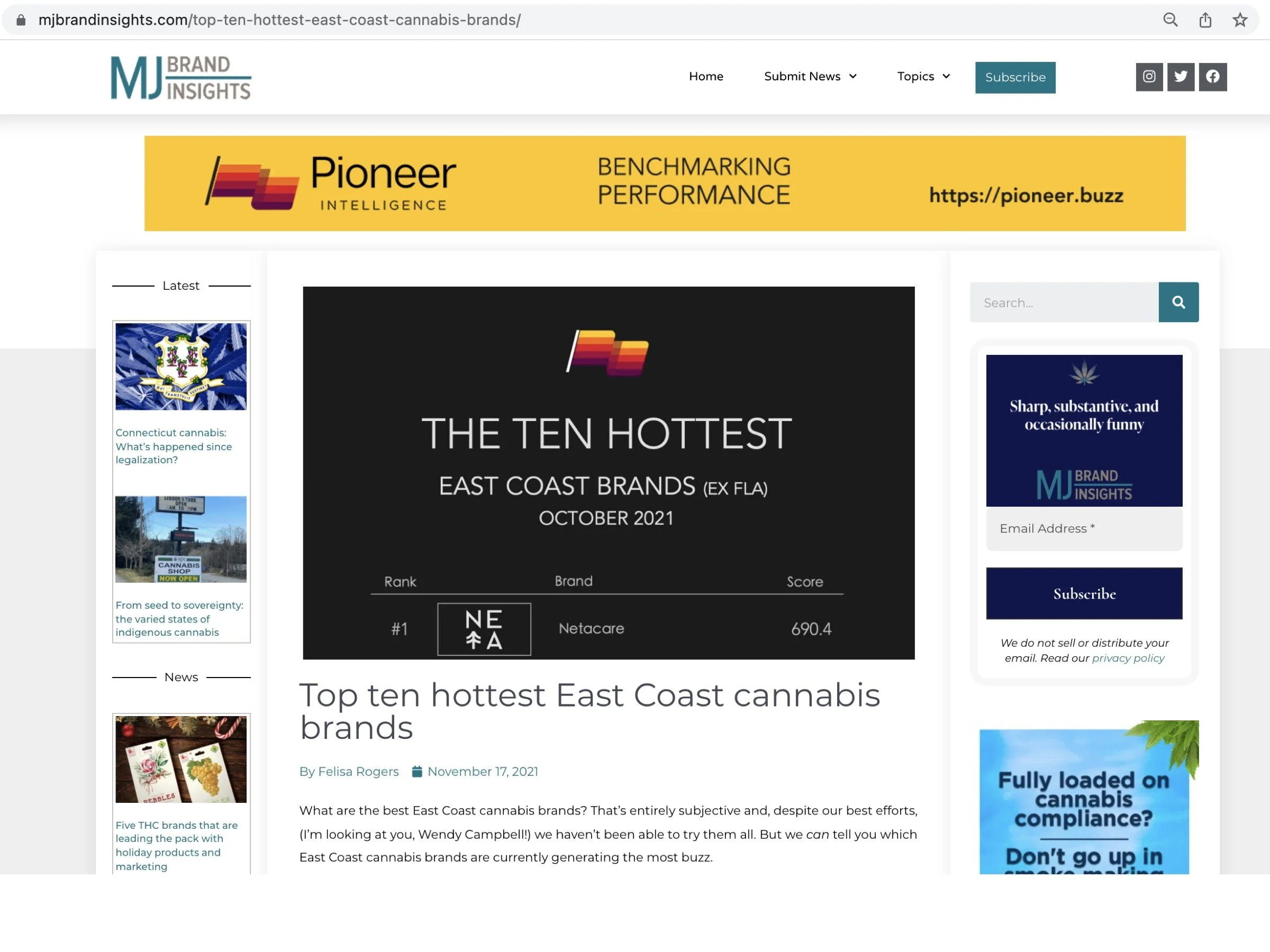
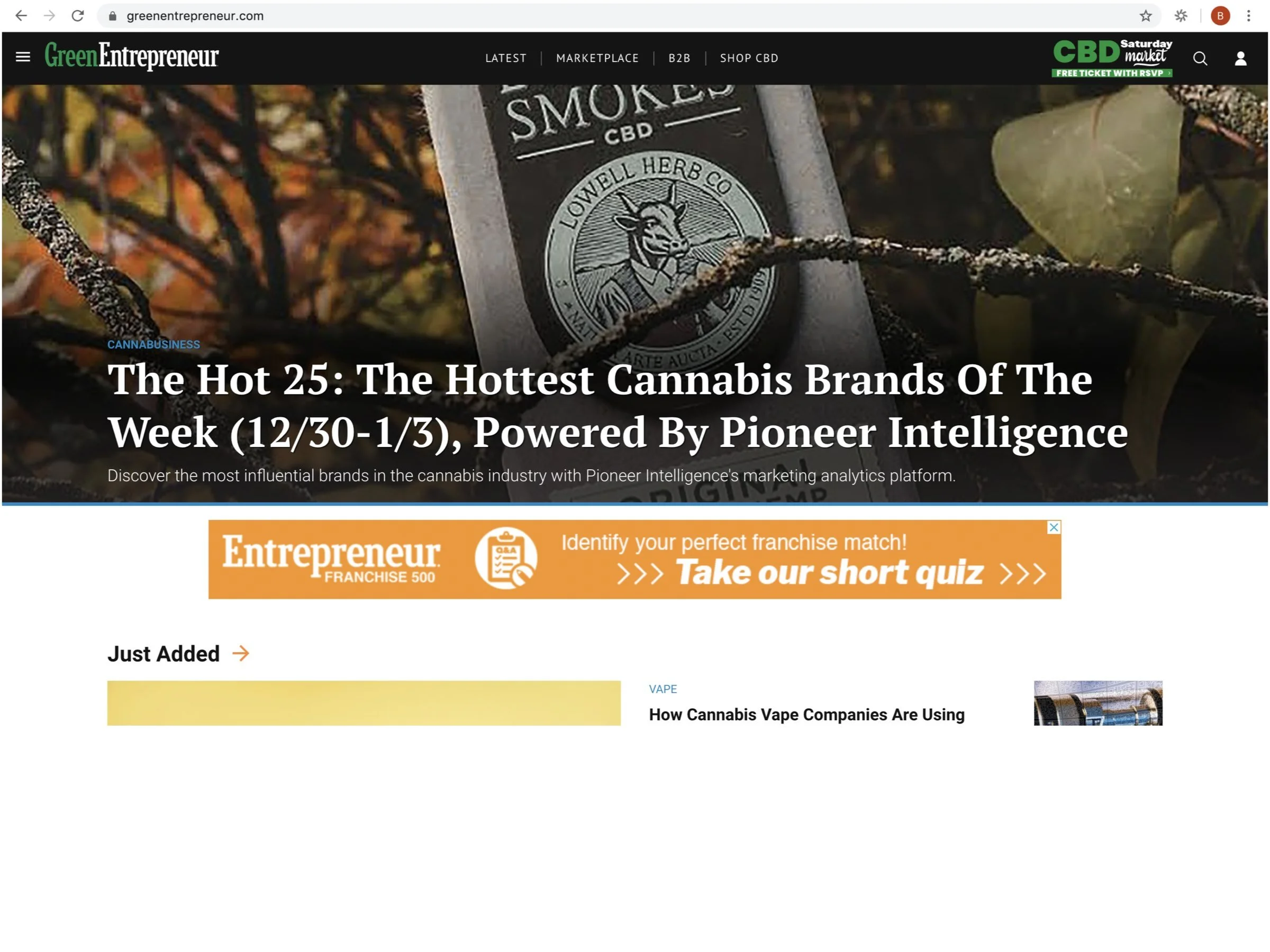
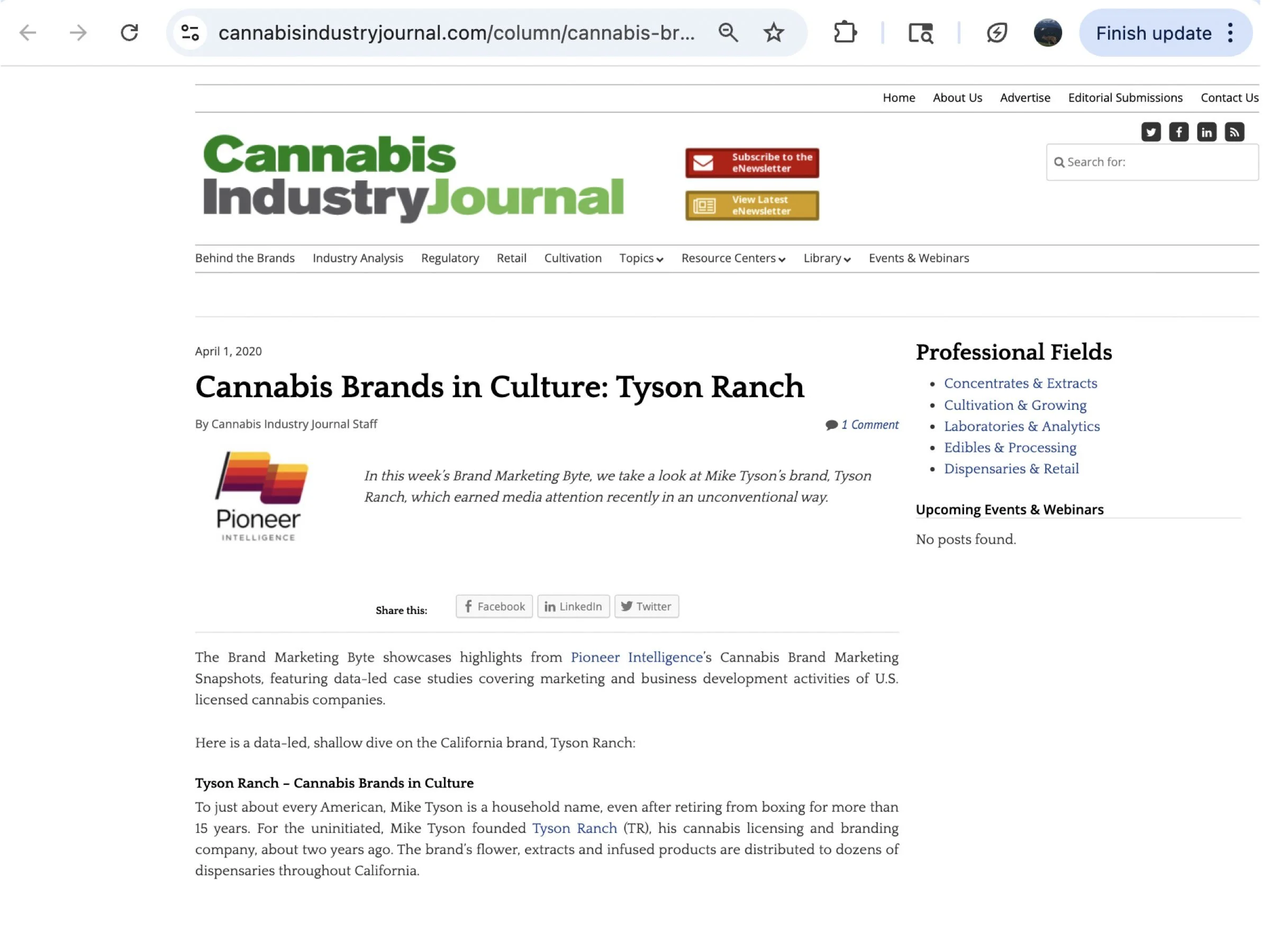
Syndicated Authority (Publishers): Cost-neutral partnerships with respected industry publishers allowed us to borrow credibility while we built our own. We secured editorial columns with Green Entrepreneur, Cannabis Industry Journal and MJ Brand Insights that provided expanded awareness, high-quality backlinks and gave Pioneer data increased authority from Day 1.
The Homepage Trap: We engineered Pioneer’s website homepage as a partial-view dashboard. Visitors could see the "middle of the pack" but had to subscribe to unlock the Top 10, turning high-traffic rankings into an automated lead-gen source.
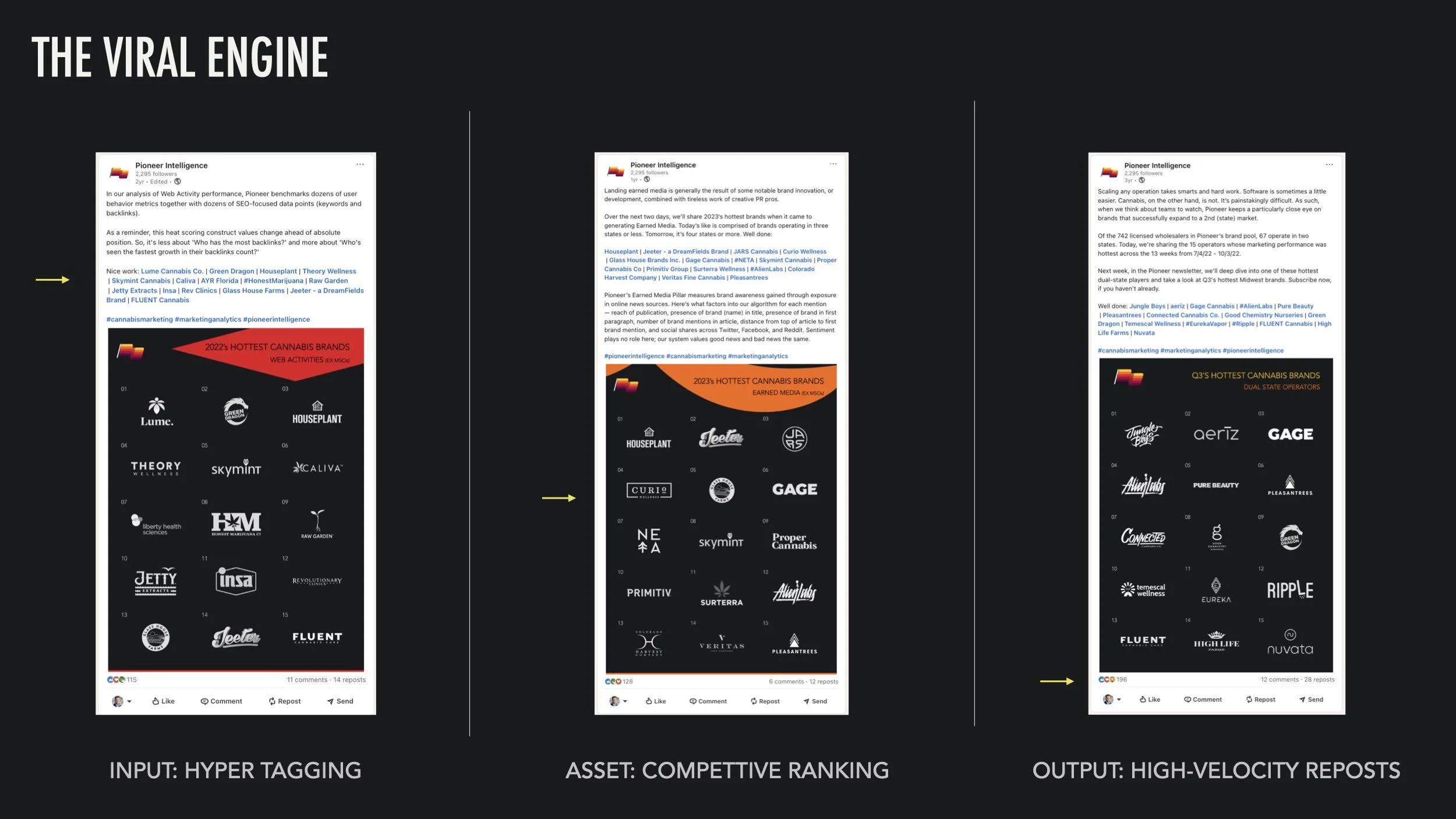
The Content Loop: We created a weekly cadence of thematic "Hot Lists" (e.g., Top 25 in Earned Media). By tagging featured brands on LinkedIn, we triggered a notification cascade that put Pioneer in front of thousands of operators for free.
Insight-Led ABM: We inverted the sales pitch. Instead of a slide deck, we DM’d CMOs a bespoke performance report benchmarking their brands against competitors. We gave them a "taste" of the product (the Scorecard), which started conversations on value, not price.
Results / The Metrics
By treating content as a product, we achieved great efficiency:
Conversion Velocity: The homepage gate drove a 36% Subscription Rate (vs. <5% B2B average), growing the list to 1,500+ organic subscribers in our first six months.
Publisher Dominance: Pioneer data lists accounted for 2 of the Top 4 most-viewed articles of the year for MJ Brand Insights.
Organic Reach: The repost loop generated 250k+ zero-cost impressions in Year 1.
Sales Efficiency: The "Insight-Led" ABM outreach generated a 27% response rate, surpassing industry benchmarks by 10x, and secured immediate, six-figure LTV from a 25-brand pilot group.
Learning / The Takeaways
Vanity drives awareness. We learned that companies will always promote content that makes them look good. By publishing rankings, we incentivized the industry to share our brand for us. It turned out that the most efficient way to get distribution was to appeal to our customers' ego.
Sampling beats pitching. We learned that a cold email with a slide deck gets deleted, but a cold email with valuable data gets read. Giving a prospect a specific, personal look at their own numbers proved our value before we ever asked for the sale.
-
The Hypothesis: We assumed high-production motion graphics would drive higher engagement for our "Hot Lists." We invested in broadcast-quality reveals (see video) to capture attention in the feed.
The Reality: We ran the test. The "boring" static scorecards outperformed these motion assets by a wide margin (approx. 3x more shares).
The Pivot: We realized our B2B audience prioritized utility over entertainment. They wanted to study the data, not watch it fly by. We immediately reallocated the motion budget into increasing the information density of our static charts. We followed the signal, not the "cool factor."