Ospop: Launching A Blue Work Shirt
Launching A Blue Work Shirt
Overview / The Challenge
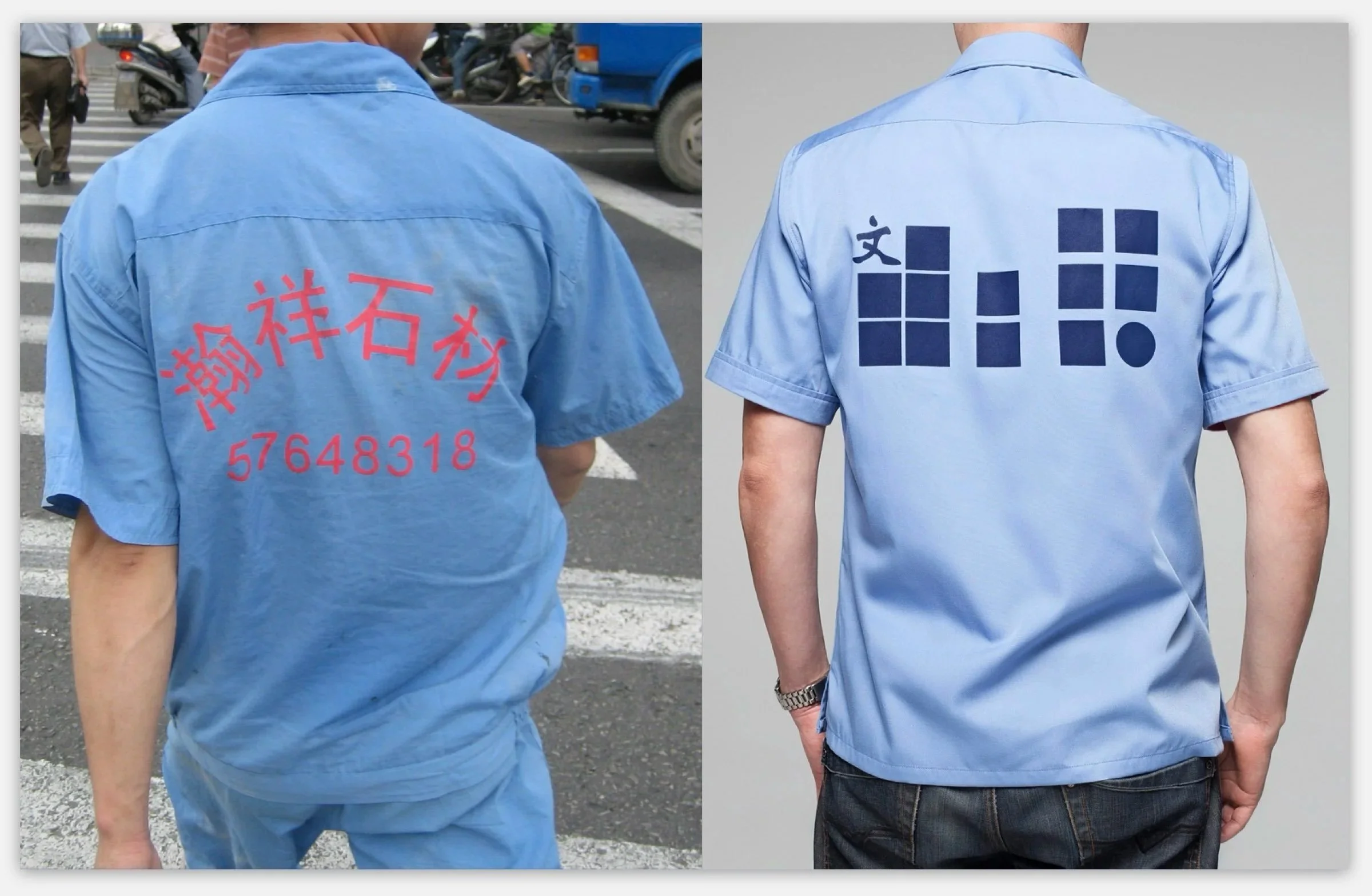
For decades, the Blue Work Shirt (part uniform, part advertisement) was an anonymous commodity for the Chinese laborer. For Ospop, it was the first expansion beyond our foundational shoe silhouette. However, the launch faced a dual challenge:
The Perception Gap: To break into China’s youth market, we had to overcome a deep cultural stigma. Workwear wasn't yet "fashion" in China; it was still seen as a uniform for toil. We needed to reframe the aesthetic without alienating our roots.
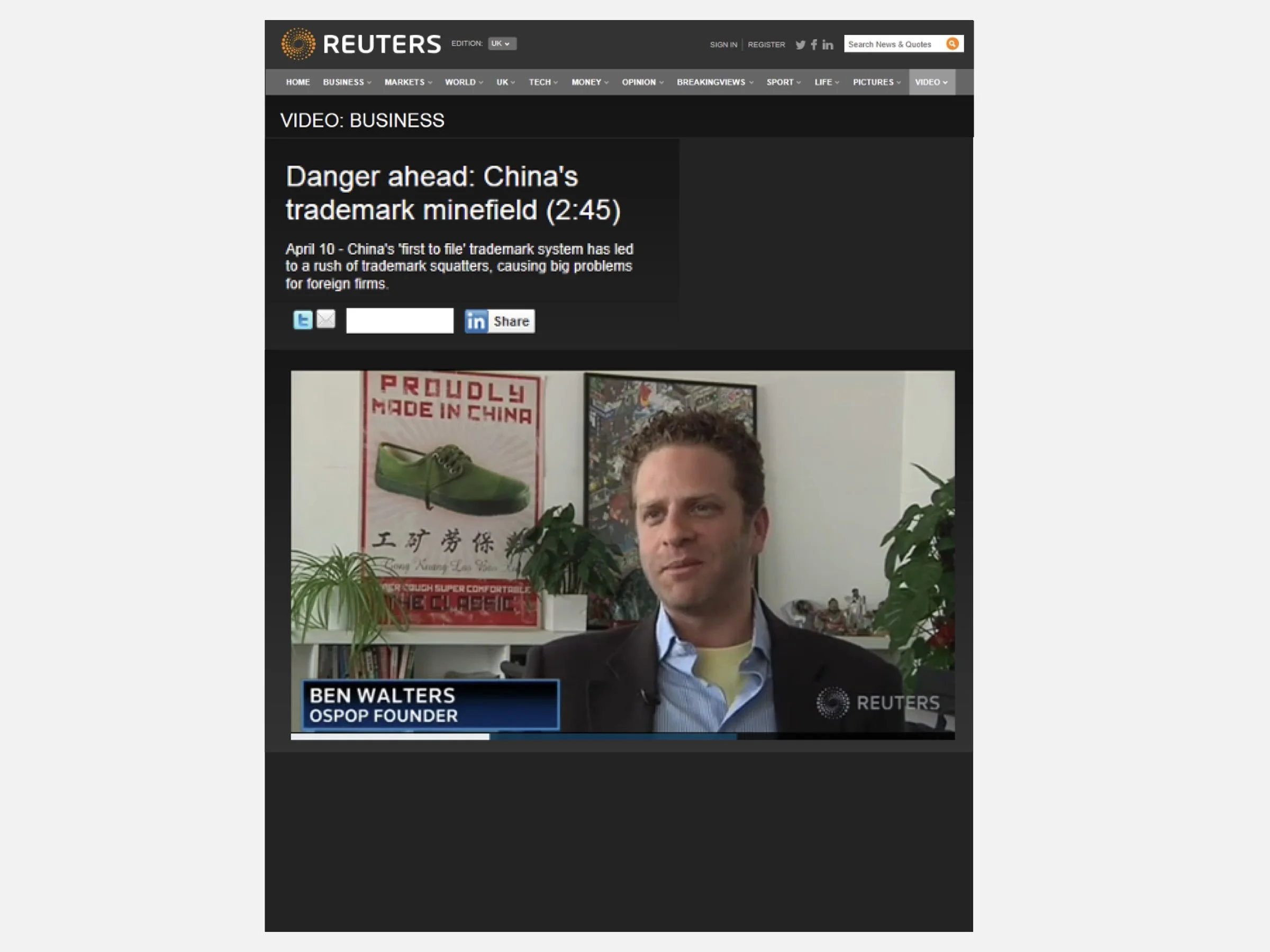
The Trademark Squatter: We were racing against a hostile entity attempting to hijack the Ospop name. We needed to prove active commercial use immediately to slow the squatters and support our effort to secure our IP.
Strategy / The Blueprint
Velocity & Prestige. We positioned the launch to hit the market fast, with an elevated message, solving both brand and legal challenges simultaneously.
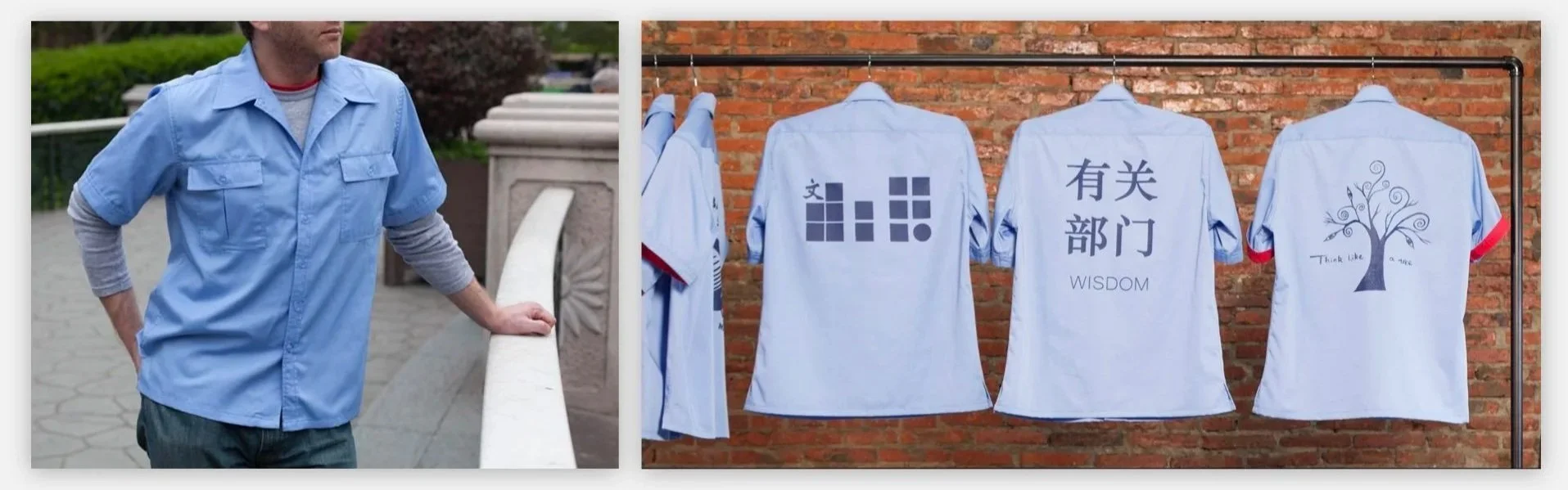
Fashion Overlay: We framed the release not as a uniform drop, but as a streetwear event. By leveraging high-credibility artists and musicians to wear the gear, we signaled that this "workwear" belonged in the studio, not just the factory.
Defensive Velocity: We treated the launch as a territorial flag. By establishing a premium, visible footprint in retail and media, we created the undeniable evidence needed to validate our claim to the brand.
Execution / The Build
We rejected the idea of single-use assets. With limited resources, we designed a campaign where every partner and dollar did the work of three.
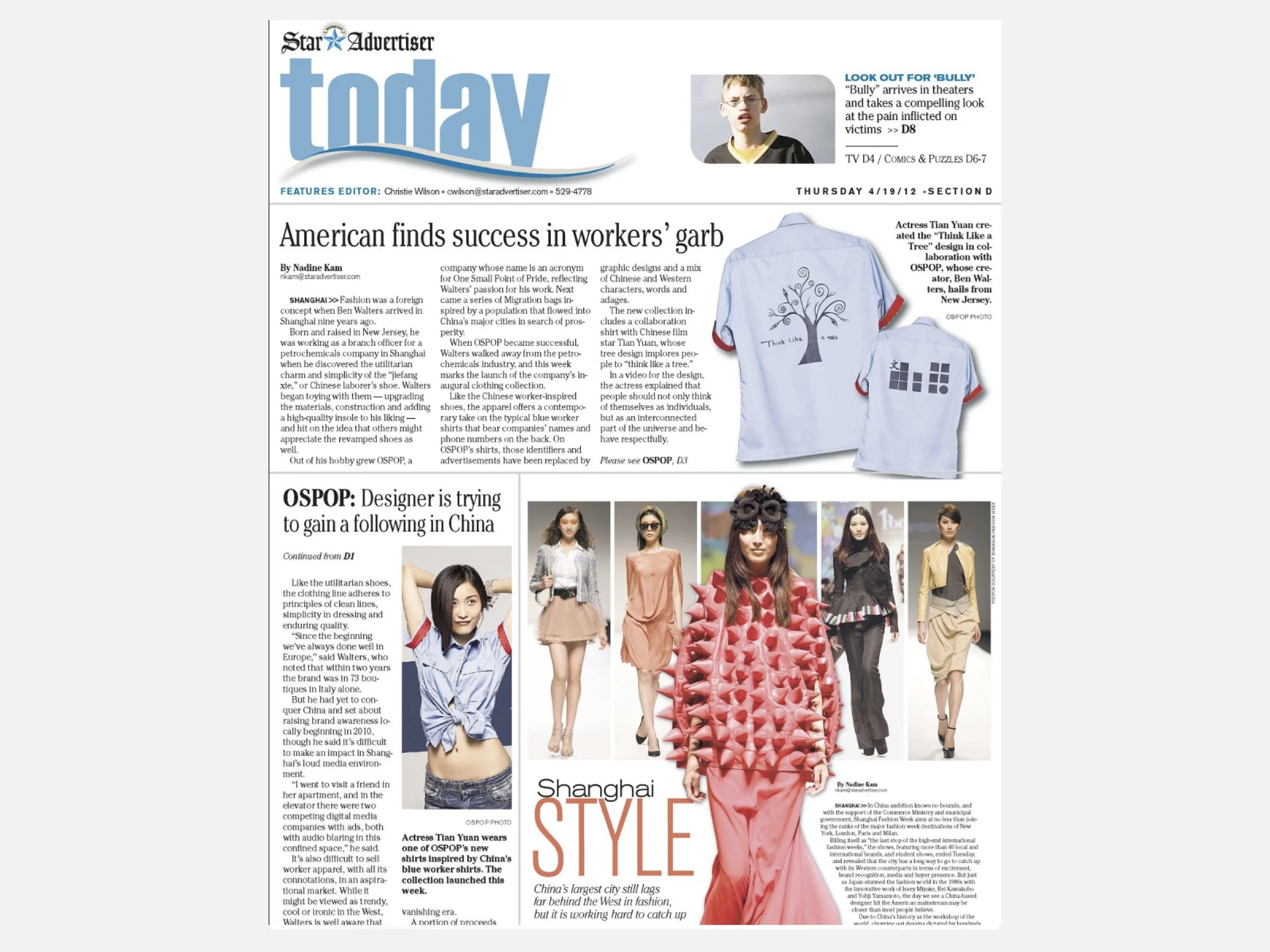
The Triple Threat (Tian Yuan): We partnered with the Art House icon not just as a face, but as a creator. She designed the shirt graphic, starred in the launch film, and acted as our primary media channel.
The Stage (JUE Festival): We anchored our launch to an existing cultural moment. By sponsoring the JUE Next Gen competition, we transformed a standard gallery opening into a headline product unveil.
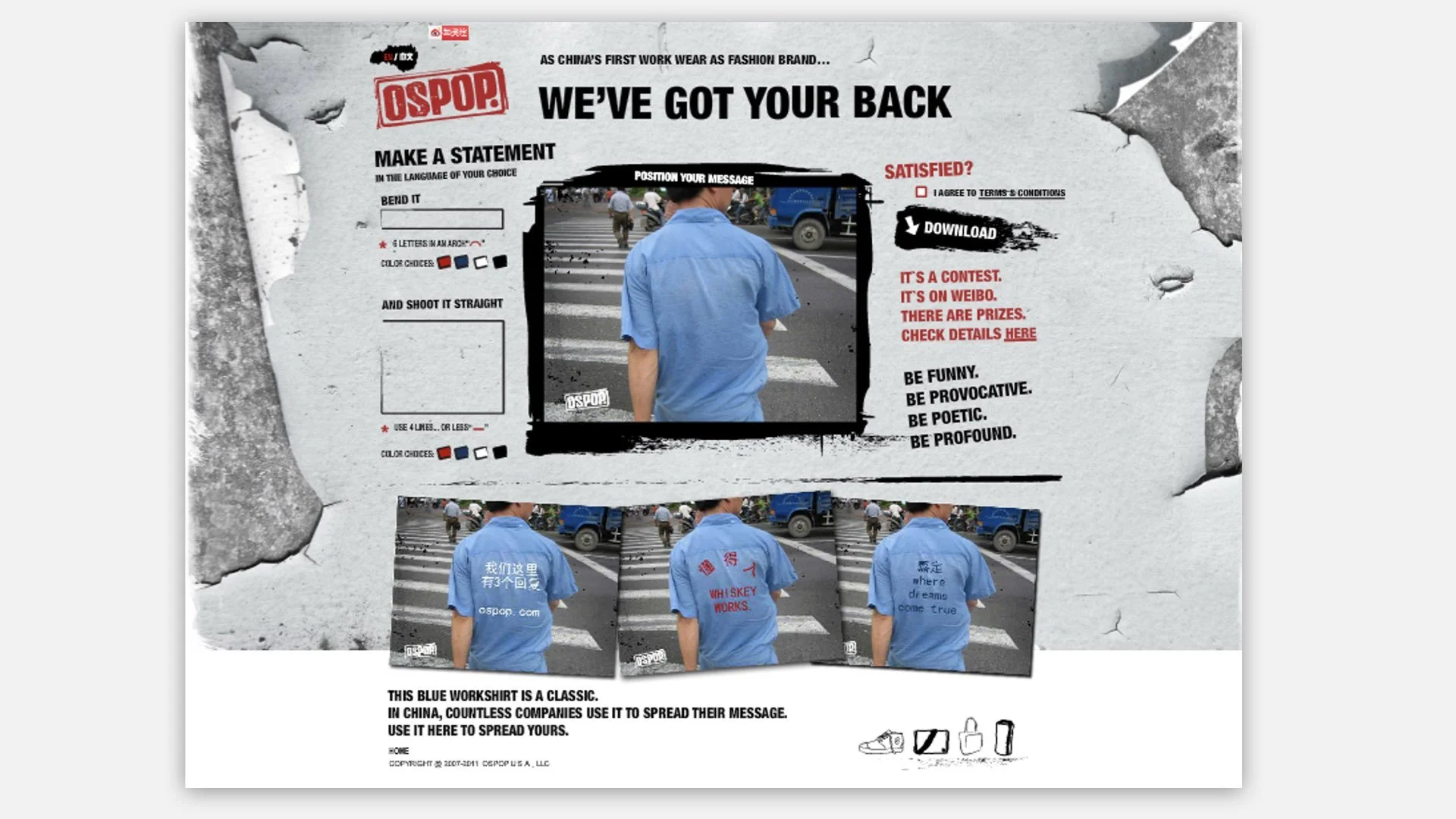
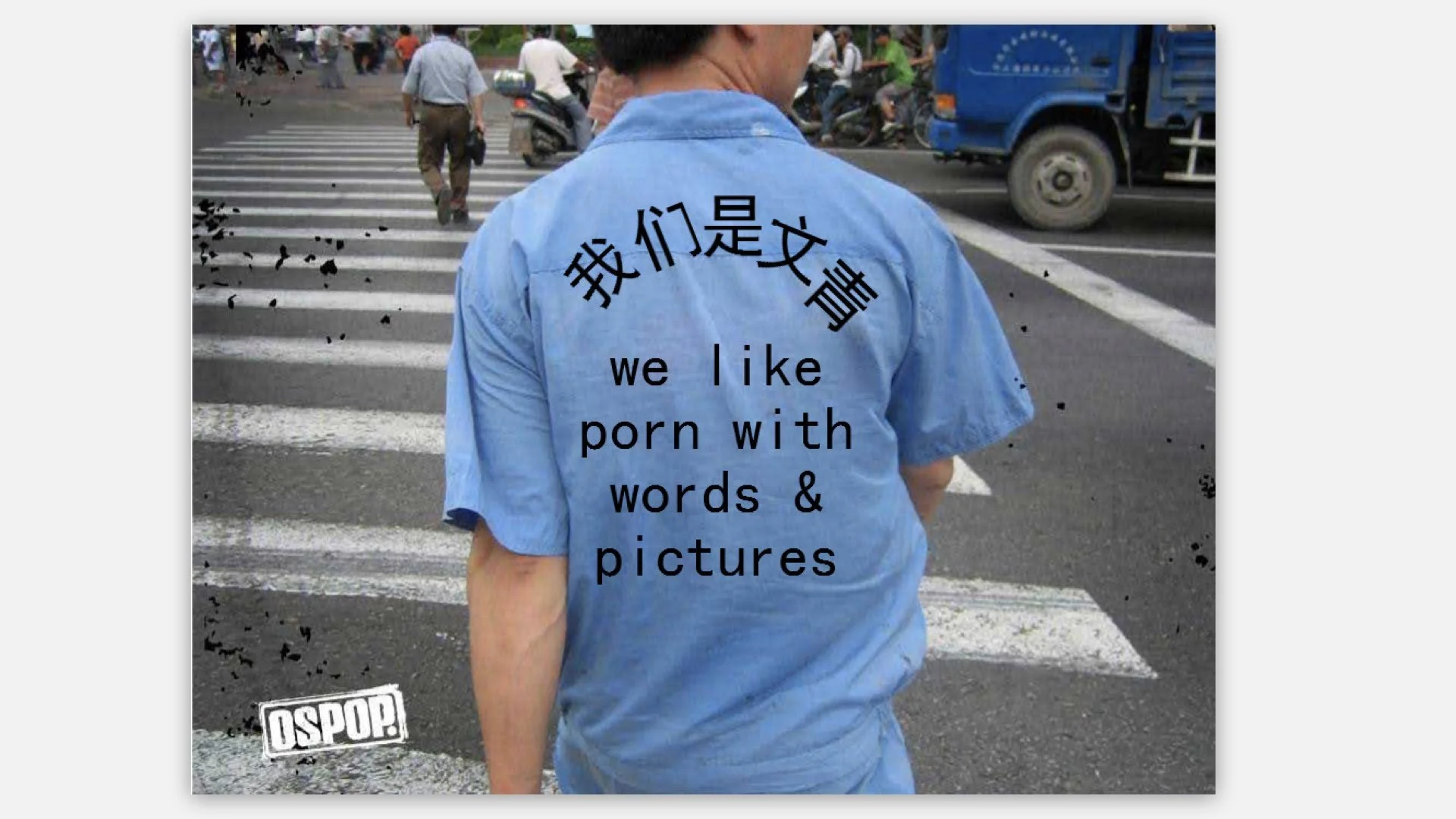
The Viral Mechanic: We gamified the design. We built a mini-site that allowed fans to "digitally graffiti" the shirt’s back panel, turning user-generated memes into organic store traffic.
Results / The Metrics
The campaign proved that integrated planning drives efficiency:
ROI & Efficiency: Direct shirt sales 3x’d total campaign spend, delivering immediate positive ROI, before factoring brand halo effect.
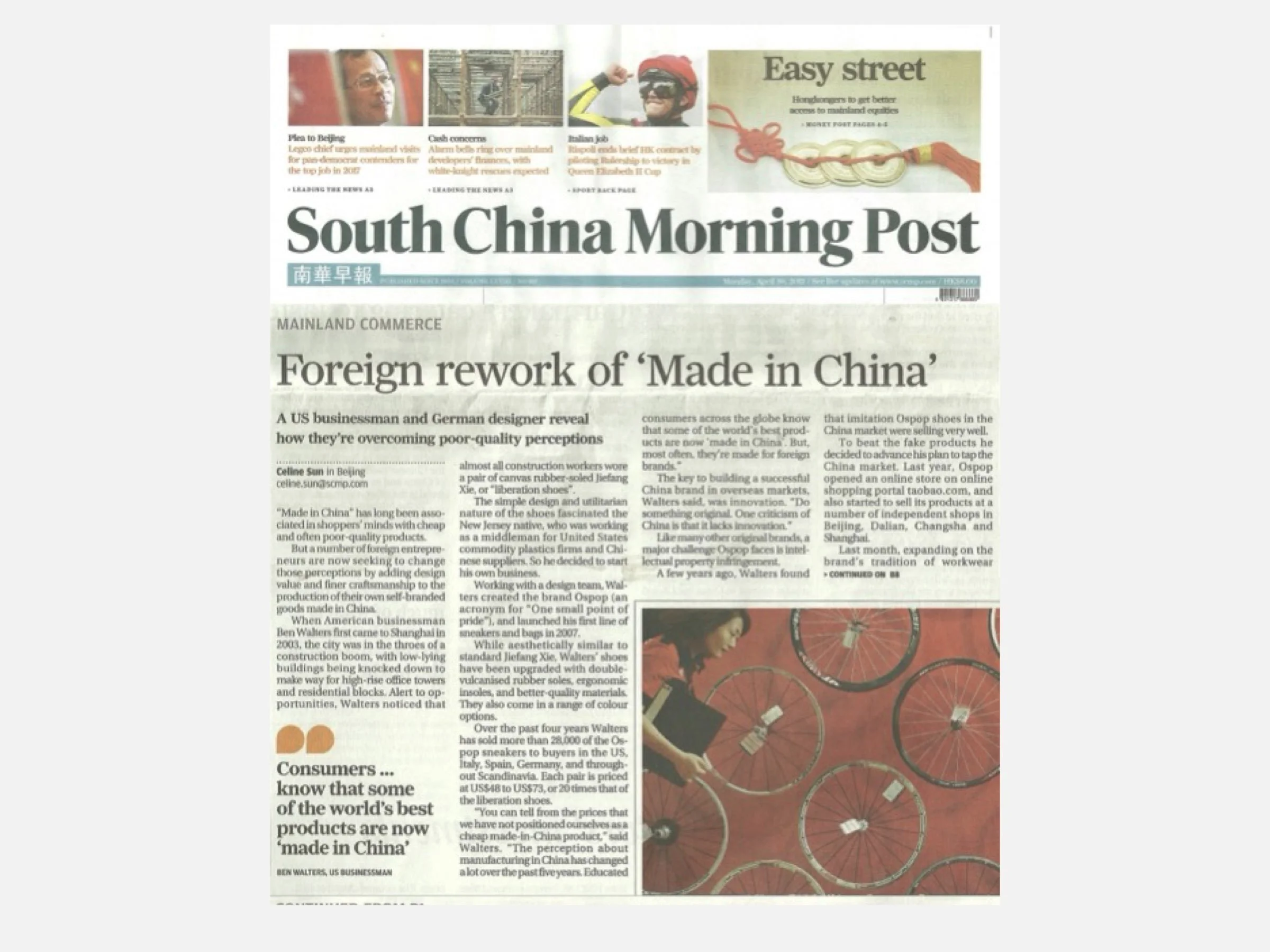
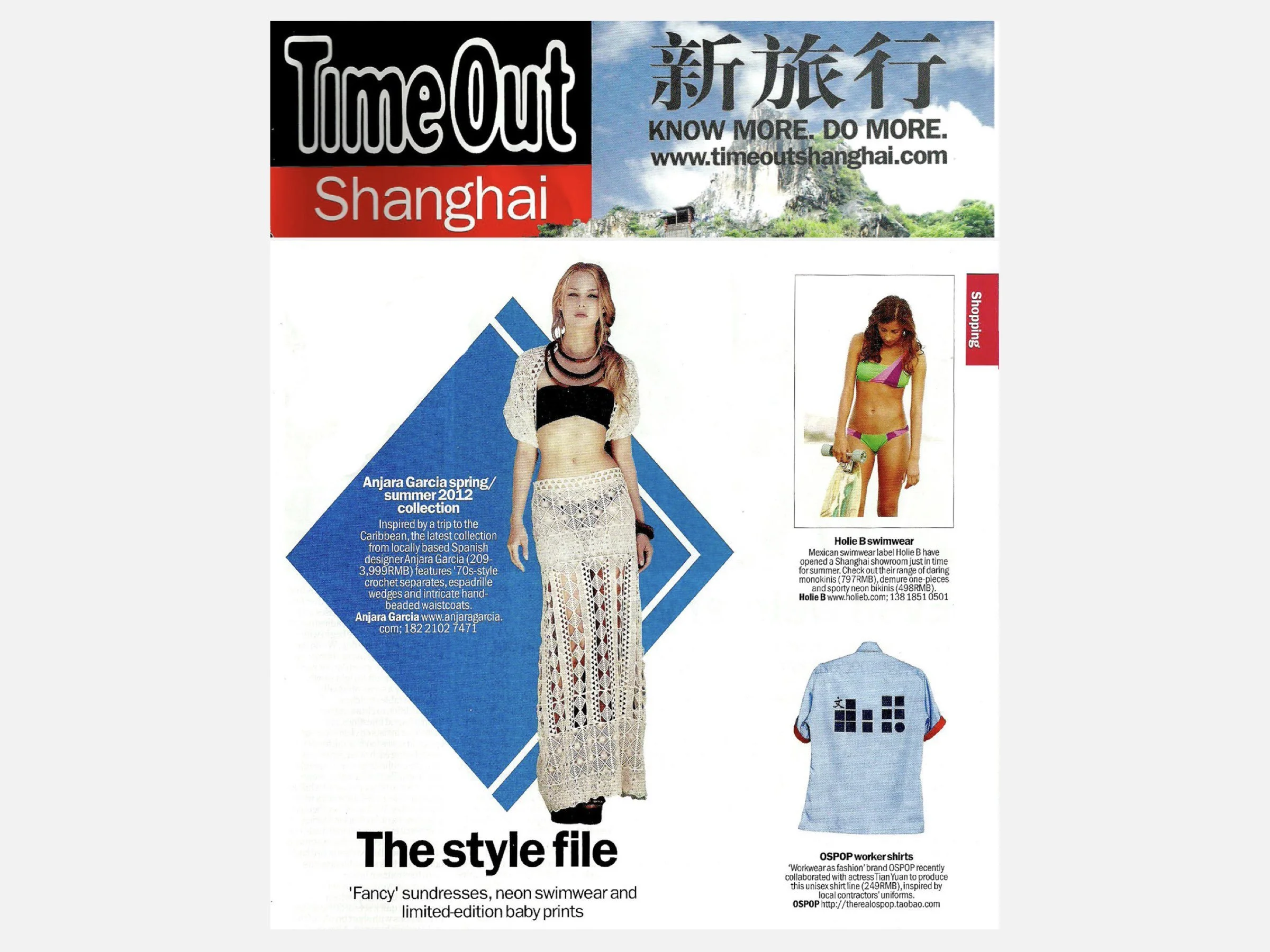
Media Impact: We extended our streak of extraordinary coverage, securing fashion features on two continents and a segment on Reuters TV that highlighted our IP defense.
Digital Engagement: The "Meme Generator" drove over 60,000 impressions, with users creating 4,500+ unique memes.
Commercial Velocity: 4 of 6 designs sold out in 30 days; full inventory cleared in <90 days.
Learning / The Takeaways
Integration creates margin and speed. By making one asset (talent) perform five functions (design, content, event, social, model), we achieved Big Brand reach on a startup budget. Furthermore, managing one deep partnership is infinitely faster and easier than managing five shallow ones.
-
The Concept: The campaign was anchored by the phrase You Guan Bu Men (有关部门)—"Relevant Government Departments." We recontextualized this dry, ubiquitous state-media term as a streetwear graphic, pairing it with the English word "WISDOM" to create a moment of shared, ironic wit.
Tactic 1: The Content (Video) To amplify the irony, we produced a 15-second animated short [shown above]. It used the visual language of government instructional videos to position the shirt not as fashion, but as a "uniform for the culturally aware."
Tactic 2: The Mechanism (Meme Generator) To scale the campaign, we opened up the format. We recognized that the back of the work shirt was effectively a "walking billboard," so we built a bilingual microsite [shown below] that allowed fans to digitally write their own slogans on the shirt.
The Function: It wasn't about a single message; it was a blank canvas. We handed the mic to the audience, inviting them to typeset their own headlines—from the poetic to the provocative.
The Result: Users generated thousands of unique images, turning the physical product into a personalized, shareable social media asset.